
Key takeaways
- Both companies started as software and now sell expert-built datasets, evaluations and reinforcement learning environments to AI labs.
- Snorkel raised $350 million at a $3.5 billion valuation in September 2026 and reports an annualized run-rate above $350 million; Labelbox announced a Series E of more than $100 million, including equity and a credit facility, at a $1.25 billion pre-money valuation in October 2026.
- Both rely on contractor expert networks (Snorkel's Expert Community, Labelbox's Alignerr) paid per project, per task or per hour, with terms that vary by project.
- Neither company's public materials describe a program for buying or licensing existing datasets from businesses. Their enterprise offerings are services and software.
- Several headline figures are company-reported and unaudited, and Labelbox's own materials give four different expert network sizes.
Who each suits

Best for
Snorkel AI
AI labs and large enterprises that want custom expert datasets, evaluations and benchmarks delivered as a service, and experts in coding, law, medicine or finance looking for project-based contractor work.

Best for
Labelbox
AI labs that want reinforcement learning environments and expert human data from one vendor, and enterprises interested in managed AI agents or a long-standing labeling platform.
At a glance#
| Snorkel AI | Labelbox | |
|---|---|---|
| What they do | Expert Data-as-a-Service, evaluations and benchmarks, and an AI data development platform12 | Human data via Alignerr, reinforcement learning environments (Horizon), and managed enterprise agents (Recursion)34 |
| Who they serve | Frontier AI labs, hyperscalers, enterprises and the US federal government5 | Frontier AI labs, hyperscalers and Fortune 500 companies, per Labelbox3 |
| How they source people | An Expert Community paid per project, in regions approved for each project6 | Alignerr expert network, "Powered by Labelbox"; role rates quoted per hour7 |
| Pay model (as advertised) | Per project; "top experts earn $3,000+ per week"6 | Alignerr advertises an $80 per hour average and role rates of $20 to $120 per hour7 |
| Founded | 2019, out of research at the Stanford AI Lab85 | 2018, headquartered in San Francisco9 |
| Funding and size | $350 million at a $3.5 billion valuation (Sept 2026); company-reported run-rate above $350 million25 | More than $100 million Series E at $1.25 billion pre-money (Oct 2026), equity plus credit facility; $189 million raised before that, per Labelbox39 |
| Notable customers (publicly stated) | BNY, Wayfair, Chubb and the US Air Force named in a May 2025 release1 | Case studies with Meta, Google Cloud and Intuitive Surgical; earlier named Genentech, Warner Bros, Allstate1011 |
| Profitability | Expected this year, per Reuters5 | Says it is profitable and grew more than 5x year over year3 |
All figures are as of October 2026 and, unless noted, come from the companies themselves.
Why this comparison matters#
Snorkel AI and Labelbox are often grouped together because both began as software for people building machine learning models. Labelbox sold a platform for labeling and managing training data.11 Snorkel sold programmatic labeling software that grew out of research at Stanford.128 Over the last two years both changed course, and the change is the main story of this comparison.
By 2026 both companies describe themselves mostly through what they deliver to AI labs: expert-written datasets, evaluations, and simulated environments in which AI agents are trained and graded.134 That puts them in the same market as expert-network companies such as Mercor and Surge AI, which Reuters named as rivals when it covered Snorkel's latest round.5 The distinction that remains is history and mix. Reuters attributes Snorkel's growth to a data-as-a-service business launched in September 2025.5 Labelbox has a human data arm, an RL environments product and an enterprise agent product.4
For a business owner, the useful question is less "which is better" than "what do these companies actually buy, and from whom." The rest of this page covers what each does, who funds it, how it sources people, what experts are paid, what has gone wrong, and what that means if you are thinking about selling or licensing data. Facts change quickly in this market, so dates are given throughout.
Timeline of disclosed funding#
| Date | Snorkel AI | Labelbox |
|---|---|---|
| 2017 | Research paper on programmatic labeling published by Stanford researchers12 | Not yet founded (2018)9 |
| Feb 2021 | Not applicable | $40 million Series C led by B Capital14 |
| Apr 2021 | $35 million Series B led by Lightspeed; $50 million raised in total8 | Not applicable |
| Aug 2021 | $85 million Series C at a $1 billion valuation15 | Not applicable |
| Jan 2022 | Not applicable | $110 million Series D led by SoftBank Vision Fund 211 |
| May 2025 | $100 million Series D at a $1.3 billion valuation, led by Addition1 | Not applicable |
| Sept 2026 | $350 million Series E at a $3.5 billion valuation2 | Not applicable |
| Oct 2026 | Not applicable | More than $100 million Series E (equity plus credit facility) at $1.25 billion pre-money3 |
The table lists only rounds that we confirmed in an announcement or news report. It is not a complete cap table for either company.
Snorkel AI#
History and founding#
Snorkel AI launched in 2019 after about four years of research at the Stanford AI Lab, according to TechCrunch's coverage of its 2021 Series B, and Alex Ratner is its co-founder and chief executive.8 The research behind it was published in 2017 as "Snorkel: Rapid Training Data Creation with Weak Supervision," by Ratner, Stephen Bach, Henry Ehrenberg, Jason Fries, Sen Wu and Christopher Re. The paper described a system in which people write labeling functions that encode heuristics instead of labeling every example by hand.12
Its first commercial products were built on that idea. In April 2021 Snorkel announced a $35 million Series B led by Lightspeed Venture Partners, with $50 million raised to that point, and introduced Application Studio, a no-code tool for building machine learning applications.8 That coverage named no customers, offering only hypothetical examples such as a bank classifying contracts.8
In August 2021 Snorkel announced an $85 million Series C at a $1 billion valuation, which brought total funding to $135 million. Fortune reported that Addition and BlackRock led the round, and mentioned Apple, Intel and Stanford Medicine as customers and partners.15 At that point the product was still labeling software in which human experts such as analysts or lawyers decide which labels to apply and the software automates much of the work.15
The 2025 and 2026 shift to expert data#
In May 2025 Snorkel announced a $100 million Series D at a $1.3 billion valuation, led by Addition with Prosperity7 Ventures joining, and put total funding at $237 million.1 The company's own press page frames the shift as moving "from data labeling to AI evaluation."16 The release made two offerings generally available: Snorkel Evaluate, for building benchmark datasets and specialized evaluators, and Snorkel Expert Data-as-a-Service, a high-touch service that pairs a network of subject matter experts with a platform for labeling and quality control.1 It named BNY, Wayfair and Chubb as customers, listed the US Air Force among federal users, and carried a comment from Anthropic's head of revenue about the need for evaluation approaches with domain expertise.1
The data-as-a-service line launched in September 2025, according to Reuters, and the commercial effect has been large.5 Reuters reported on September 22, 2026 that Snorkel raised $350 million at a $3.5 billion valuation, led by Insight Partners and S32, with Addition, Greylock and Wells Fargo among the existing investors taking part.5 The company's own announcement labels the round a Series E, names Insight Partners and S32 as co-leads, and lists new investors including March Capital, Blumberg Capital, Allegis Capital, Frontline, Standard and Third Point Ventures.2
Revenue figures differ slightly by source. Reuters said annualized revenue had passed $350 million, up from roughly $20 million a year earlier.5 Snorkel's press release says it "surpasses $375M" in annualized run-rate revenue and describes growth of more than 18x in less than a year.2 A run-rate is a snapshot of recent revenue annualized, not audited full-year revenue, so treat both numbers as company-reported.
Reuters also said Snorkel expects to reach profitability this year.5 Reuters listed the planned uses of the money as hiring researchers and engineers, expanding enterprise and government operations, supporting third-party model evaluations, and entering new verticals and data modalities.5 Snorkel's release describes similar aims: more capacity for what it calls its agentic data factory, investment in vertical and enterprise AI, new domains and modalities, and its open research programs.2
Products and business model#
As of October 2026, Snorkel's homepage uses the tagline "We build the data that pushes the frontier" and says it helps frontier labs and AI teams build specialized training data and environments.13 The homepage lists:
- Data development. Expert demonstrations and reasoning traces, preference labels and rankings, rubrics with verifiable outcomes, and standard or custom environments, including curriculum-structured "Data Series" datasets.13
- Expert Data-as-a-Service and Snorkel Evaluate. The two offerings launched in May 2025, now part of a broader catalog of datasets, benchmarks and evals.12
- Benchmarks and leaderboards. Public leaderboards for areas such as agentic coding, computer use and knowledge work.13
- Expert community. A network where contributors are paid to work on AI data projects.13
Reuters described the model plainly: Snorkel sells the data products experts produce rather than charging for their labor, and says that lets it pay experts more generously while preserving margins. No pay figures were given in that article.5 In Reuters' account, a platform pairs human experts with many specialized AI models and agents; experts design scenarios, tasks and grading rubrics, while AI automates much of the quality assurance.5
Open Benchmarks Grants#
Snorkel launched Open Benchmarks Grants in February 2026, according to its July 2026 release. That release describes a $3 million commitment, with partners including Hugging Face, Prime Intellect, Together AI, Factory, Harbor and PyTorch, and it names the first funded projects: Frontier-Bench, Agents' Last Exam and OSWorld 2.0, among others.17 The grants are mostly in-kind: Snorkel's program page lists expert data, research and engineering support, and compute credits and hosting rather than cash.18 The program page now describes a $30 million commitment, expanded 10x, so the program appears to have grown since the July release.18 Snorkel said the tasks in Agents' Last Exam were sourced and validated by more than 300 industry experts.17
Who Snorkel serves#
Reuters lists frontier AI labs, hyperscalers, enterprises and the US federal government as customers, with coding data among the biggest areas of demand.5 The September 2026 release names no specific customers.2 The May 2025 release is the most recent that does name customers: BNY, Wayfair, Chubb and the US Air Force.1 Snorkel's homepage displays logos including Google, Anthropic, OpenAI, Microsoft, Amazon Web Services and several universities under the line "proud to partner with top frontier AI and research teams," but it does not describe what those engagements involve.13 The homepage also shows SOC 2 and HIPAA logos and links to a security page.13
Contributor terms and pay#
Snorkel recruits experts through an Expert Community. Its own page says members are paid per project with rates based on expertise and complexity, many projects pay for attempts plus bonuses for high-quality work, every contribution goes through quality review, and "top experts earn $3,000+ per week." The page gives no data behind that last figure or a definition of "top expert."6 Applicants typically need an advanced degree in one of the listed fields, must be in a region approved for the project, and must be open to independent contractor work. Snorkel says it engages contributors only in select locations for legal, tax and compliance reasons.6 Payments are processed weekly through HireArt as agent of record for work accepted in the prior week, with a stated aim of paying within two weeks of acceptance.6
We did not find a reliable independent source for specific per-task rates, so this page does not quote any. Anyone applying should get the rate, the unit (attempt, accepted submission or hour) and the payment date in writing, because Snorkel's page itself says timelines and projects vary.6
Controversies and setbacks#
We found no lawsuits or regulatory actions involving Snorkel.
Labelbox#
History and founding#
Labelbox was founded in 2018 and is headquartered in San Francisco's Mission District; Manu Sharma is co-founder and CEO.9 Its Series E post describes three chapters for the company: training data from 2018, reinforcement learning environments, and now agents.3
In February 2021 Labelbox announced a $40 million Series C led by B Capital, with Andreessen Horowitz, Gradient and Kleiner Perkins returning and Cathie Wood, Tau Ventures and the founders of Snapdeal joining. The company described the platform as built on three pillars: annotate, manage and iterate.14
In January 2022 Labelbox announced a $110 million Series D led by SoftBank's Vision Fund 2, with Databricks Ventures and Snowpoint Ventures joining existing investors B Capital, Andreessen Horowitz and ARK Invest's Catherine Wood.11 The announcement named customers including Genentech, Warner Bros, Black & Decker, Stryker and Allstate, and said model-assisted labeling let teams cut data labeling costs by over 50 percent, a vendor claim.11 Labelbox's about page puts total funding before the latest round at $189 million.9
The 2026 Series E#
On October 14, 2026 Labelbox announced a Series E of more than $100 million, including equity and a credit facility, at a $1.25 billion pre-money valuation. Infinitum Partners led, with Wipro Ventures, a16z, B Capital, Tau Ventures and Snowpoint Ventures among the participants.3 The company says it reached profitability this year, grew more than 5x year over year, and has more than 400 customers. These are company claims and Labelbox gave no revenue figure.3 It also says 90 percent or more of leading US AI labs work with it; the same post uses slightly different wording elsewhere, and neither says whether those labs are all paying customers.39
Pre-money and post-money valuations differ, and a round that mixes equity with a credit facility is not a pure equity raise, so the Labelbox and Snorkel headline numbers are not directly comparable.
Products and business model#
Labelbox's homepage describes its pitch as "the environments frontier labs train AI on" and lists four products.4
- Alignerr. Its expert network, which writes rubrics, preferences and graded assessments.4
- Horizon. RL training environments and evaluations for reasoning, tool use and computer use. Its WorldSim component simulates enterprise tools such as GitLab, Jira, CRM, email and chat, where models complete multi-step tasks.10
- Recursion. An enterprise platform for specialist agents. Labelbox introduced it in June 2026 as an RL platform covering finance, legal, security, insurance, manufacturing and operations workflows.19 The Series E post describes Recursion Managed Agents as fleets of agents running inside business applications, with more than 50 internal agents running across Labelbox.3
- Terra. A robotics data line, including egocentric and teleoperated demonstrations captured from several synchronized viewpoints.4
Horizon's page says environments are "co-designed with domain experts" and describes a Meta project in which Labelbox built the data foundation for the GIM benchmark, with 820 expert-authored problems across seven cognitive categories.10 It says WorldSim recreates enterprise environments "using realistic business data" but does not say where that data comes from.10 That is the one place where Labelbox's public materials touch the question of business data, and they stay silent on sourcing.
The Series E post also says Labelbox runs sandbox infrastructure that operates millions of VMs, and that it has an expert network of more than 4 million people.3
Who Labelbox serves#
The Series E post describes a customer base of leading tech companies, hyperscalers and Fortune 500 companies without naming any.3 Labelbox's homepage shows customer logos including Shutterstock, Ideogram, Stryker, Walmart, Pinterest and Etsy, and case studies for Meta, Google Cloud, Intuitive Surgical and an unnamed retailer.4 The Recursion post names the same case studies.19 These are the vendor's own accounts of customer projects. The homepage lists SOC 2 Type II, GDPR, CCPA, NIST 800-171 and PCI DSS among its certifications and compliance frameworks.4
Alignerr: size, pay and terms#
Alignerr began as a way for companies to hire vetted experts. In November 2024 Labelbox announced Alignerr Connect, a marketplace where AI teams hire experts directly and bring them into their own pipelines, with candidates screened using interview transcripts, assessment scores and past-project metrics. Ideogram was cited as a customer, and the announcement gave no pricing.20
The size of the expert network is described differently in different places. Alignerr's site asks visitors to "join 100,000+ experts" and claims 1,000 or more hired weekly.7 When Labelbox announced the Upcraft acquisition on February 10, 2026, it described Alignerr as "over 1 million domain experts."21 The Series E post cites an expert network of more than 4 million people without naming Alignerr.3 The October 2026 homepage claims 2.6 million or more skill-tested experts across more than 200 domains.4 The numbers may measure different things (applicants, vetted experts, active workers), but the sources do not say.
On pay, Alignerr's page claims an average of $80 per hour and $1 million paid weekly, and lists role rates ranging from $20 to $30 for some language roles up to $40 to $120 per hour for reviewer and AI training roles.7 The page links to terms of use that we could not review, so worker classification is unconfirmed. The rates are advertised figures, not an official rate card or a guarantee.
In February 2026 Labelbox acquired Upcraft, an AI sales-automation company founded in 2021, to apply AI agents to recruiting and engaging Alignerr experts. Terms were not disclosed.21
Controversies and complaints#
We found no lawsuits or regulatory actions involving Labelbox. The Better Business Bureau profile for Alignerr shows an F rating, no accreditation, eight complaints in the last three years and four in the last twelve months.22 BBB complaints are consumer-submitted and not necessarily verified, and we did not review the complaint text or any company responses. It should be read as a signal to check payment terms before starting, not as evidence of any specific practice.
Head to head#
Business model#
Snorkel's model, per Reuters, is to sell data products and keep the labor inside the product price.5 Labelbox sells a wider mix: a software platform, human data, RL environments, robotics data and managed agents.4 That makes Labelbox look more like a platform company with a services arm, and Snorkel look more like a services-led data lab with a research platform behind it. Both descriptions rely on how each company frames itself.
Scale and money#
Snorkel's September 2026 valuation is $3.5 billion, nearly three times its May 2025 figure, with a reported run-rate above $350 million.5 Labelbox reports a $1.25 billion pre-money valuation, more than 5x growth and profitability, but no revenue figure.3 On disclosed numbers, Snorkel is the larger company; on profitability, Labelbox says it is profitable while Snorkel is expected to be.53
People and pay#
Both depend on contractor experts. Snorkel's page describes credentialed, project-based, independent contractor work with weekly processing of accepted contributions.6 Alignerr advertises hourly averages and a wide range of role rates.7 Snorkel's advertised top-end earnings and Alignerr's advertised hourly averages are both company marketing, and both vary by domain, location and project. If you are an expert evaluating either, ask for the rate, whether work is paid per attempt or per accepted submission, and when payment is made.
Research and public benchmarks#
Snorkel has an unusually public research footprint through Open Benchmarks Grants and public leaderboards.1713 Labelbox's public emphasis is on Horizon environments and customer case studies.10 If you value open evaluation work, Snorkel's grants are more visible; if you want environments for training agents, Labelbox's product page is more specific.
Enterprise buyers#
Both court enterprises. Snorkel's materials emphasize expert datasets and evaluations that can mix in a customer's in-house expertise and data, and name BNY, Wayfair, Chubb and the US Air Force.1 Labelbox targets enterprises with Recursion but its public materials name no enterprise Recursion customers; the named case studies are Horizon and data projects.19 Anyone considering either as a vendor should ask for references in their own industry.
The wider market these companies sit in#
Both companies sell into a market reshaped by the 2025 Scale AI transaction. In June 2025 TechCrunch reported that Scale AI confirmed a significant investment from Meta, reported at about $14.3 billion for a 49% stake and valuing Scale at $29 billion, and that CEO Alexandr Wang was leaving to join Meta, with Jason Droege named interim CEO.23 A TechCrunch report citing Reuters said Google, which had planned to spend about $200 million with Scale that year, was planning to cut ties and was talking to competitors, and that OpenAI had reportedly made a similar decision months earlier.24 On July 30, 2026, Scale announced that its board had appointed Francis deSouza, a former Google Cloud executive and Illumina CEO, as CEO effective August 10, 2026, succeeding Droege.25
Expert networks have also raised large rounds. In October 2025 TechCrunch reported that Mercor raised $350 million at a $10 billion valuation, and that the company says it has more than 30,000 experts earning over $85 an hour on average.26 Snorkel and Labelbox describe the same underlying demand from AI labs for expert-written data, and both now compete for the same pool of domain experts. For comparisons of those neighbors, see Scale AI vs Labelbox.
Strengths and weaknesses#
Snorkel AI#
- Strengths: rapid reported growth, a recent large raise from established investors, a public research record dating to a 2017 paper, and a clear services model.2512
- Weaknesses: company-reported revenue, projects limited to approved regions for contributors, and no named customers in its 2026 release.26
Labelbox#
- Strengths: a longer record as a standalone platform vendor, a broad product set from human data to environments to agents, stated profitability, and a large reported expert network.14113
- Weaknesses: inconsistent expert network figures, an unclear boundary between its older platform business and newer lines, and consumer-submitted complaints on the BBB listing for Alignerr.372122
Who each suits#
Snorkel AI suits AI labs and large enterprises that want custom expert datasets or evaluations delivered as a service. It also suits credentialed experts, such as lawyers, physicians, engineers and finance professionals, who prefer project-based work with per-project pay.6
Labelbox suits teams that want human data and RL environments from one vendor, and enterprises curious about managed agents.3 It also suits experts who want a large marketplace of tasks and are comfortable with the variability that comes with it.7
Neither is obviously suited to a business that wants to license a dataset it already owns. For that goal, see the next section.
What this means for data sellers#
The main lesson is about how the AI data market pays. The most visible 2026 growth stories, Snorkel's and Labelbox's, come from commissioned, expert-built data: tasks designed by experts, graded by rubrics, and delivered to labs.510 That is different from licensing an archive of customer-support conversations, contracts, code or CRM history that a company already holds.
Three points follow from the public record:
- No public buyer program. Neither company's materials describe a channel for buying a company's existing data. Snorkel says enterprises can mix in-house expertise and data with datasets built by outsourced experts, which is about building new data, not purchasing old data.1
- Business data appears in simulations, but sourcing is unstated. Labelbox says WorldSim uses realistic business data, without saying whether any is licensed from companies.10 A seller should not assume that this is a demand signal.
- Contractor work is the visible entry point. If you or your staff have deep expertise, both companies recruit individual experts. That is labor, not data licensing, and it comes with contractor terms.67
If you do hold proprietary data, start with what you have, how the process works, and the trust and privacy information. Be cautious about sending anything sensitive to a vendor before contract terms are clear. SellYourAIData is not affiliated with Snorkel AI or Labelbox, and nothing on this page suggests either company is a buyer of your data.
Do not let one buyer set your price. Any single buyer's published range, program page or first offer is that buyer's number, not the market's. The sensible move is to get competing offers on the same data, compare scope, exclusivity, indemnity and payment timing side by side, and have someone independent look at the terms. Our guide to selling direct vs using a broker explains how, and if a buyer is already talking to you, we review offers free.
Questions to ask before working with either company#
These are not claims about the companies. They are a checklist drawn from the gaps in the public record:
- If you are a vendor customer: what data of yours is used to build datasets or environments, who can see it, and is it used for any other customer?
- If you are an expert contractor: what is the rate, the unit, the payment date and the classification of the work?
- If you are a data owner: is there a written statement of whether the company licenses existing datasets at all, and on what terms?
- For any growth or profitability figure: is it audited, and what period does it cover?
What we could not verify#
- Snorkel's run-rate is reported as above $350 million by Reuters and above $375 million by the company, and neither is audited.25
- The size of Snorkel's Open Benchmarks Grants commitment appears as $3 million in the July 2026 release and $30 million on the program page.1718
- Labelbox's expert network is described as 100,000+, over 1 million, 2.6 million+ and more than 4 million in different places.72143
- We could not review Alignerr's terms of use, so worker classification is unconfirmed.
- Neither company publishes a full customer list for 2026.
Related reading#
For broader background, see our guide to selling data to AI companies and the related Scale AI vs Labelbox comparison.
Frequently asked questions
Both now deliver expert-built data and evaluations to AI labs. Snorkel describes itself as a data lab and sells an Expert Data-as-a-Service offering, while Labelbox has a human data arm (Alignerr), a reinforcement learning environment product (Horizon) and an enterprise agent product (Recursion). Their histories differ too: Snorkel came out of research at the Stanford AI Lab and launched in 2019, and Labelbox was founded in 2018 as labeling software.
On reported valuation, Snorkel is larger: $3.5 billion in September 2026 versus a $1.25 billion pre-money valuation for Labelbox in October 2026. Both figures are company-announced, and pre-money and post-money valuations are not directly comparable. Revenue is only disclosed by Snorkel, as an annualized run-rate above $350 million.
Neither company's public materials that we reviewed describe buying or licensing existing datasets from businesses. Snorkel says enterprises can mix in-house expertise and data with datasets built using outsourced experts, and Labelbox says its simulated company worlds use realistic business data without saying where it comes from. Both are best read as services vendors.
Both pay contractors by project, task or hour, and rates vary. Snorkel's own page says experts are paid per project and that top experts earn more than $3,000 a week. Alignerr's own page claims an $80 hourly average and role rates from $20 to $120 an hour. These are advertised figures, not guarantees.
For Labelbox, the Better Business Bureau profile for Alignerr shows an F rating and eight complaints over three years; these are consumer-submitted and unverified. We found no lawsuits or regulatory actions for either company.
Not based on their public materials. They sell data, evaluations and environments to AI labs, and recruit individual experts as contractors. A company that wants to license an existing dataset would need to check directly whether either is a buyer, and should compare the options on the SellYourAIData buyers page.
From the companies' own announcements, plus Reuters coverage of Snorkel's September 2026 round and TechCrunch coverage of earlier rounds. Where sources disagree, such as Snorkel's run-rate or Labelbox's expert network size, this page says so.
Sources
Every numbered reference above points to an entry here. Figures come from these pages as of the date shown at the top of the article. Where a source reports a number it got from unnamed people, the text says so.
- Snorkel AI Announces $100 Million Series D and Expanded Platform to Power Next Phase of AI with Expert Data (Business Wire via Silicon UK, May 2025)
- Snorkel AI raises $350M to scale the data factory for frontier AI (Snorkel AI press release, September 2026)
- Labelbox raises $100M+ Series E (Labelbox, October 2026)
- Labelbox (Labelbox, accessed October 2026)
- Exclusive: Snorkel AI valued at $3.5 billion amid surging demand for complex AI training data (Reuters via KFGO, September 2026)
- Snorkel Expert Community (Snorkel AI, accessed October 2026)
- Alignerr, powered by Labelbox (Alignerr, accessed October 2026)
- Snorkel AI scores $35M Series B to automate data labeling in machine learning apps (TechCrunch, April 2021)
- About Labelbox (Labelbox, accessed October 2026)
- Horizon: Environments for post-training, at scale (Labelbox, accessed October 2026)
- Announcing our Series D (Labelbox, January 2022)
- Snorkel: Rapid Training Data Creation with Weak Supervision (arXiv, November 2017)
- Snorkel AI (Snorkel AI, accessed October 2026)
- Why we raised our Series C round (Labelbox, February 2021)
- Snorkel AI funding data labeling startup (Fortune, August 2021)
- Snorkel AI raises $100 million to build better evaluators for AI models (Snorkel AI, May 2025)
- Snorkel AI highlights first wave of Open Benchmarks Grants projects (Snorkel AI press release, July 2026)
- Open Benchmarks Grants: closing the evaluation gap in agentic AI (Snorkel AI, accessed October 2026)
- Introducing Recursion: the RL platform for enterprise specialist agents (Labelbox, June 2026)
- Announcing Labelbox Alignerr Connect: connect with proven AI experts (Labelbox, November 2024)
- Welcoming Upcraft to the Labelbox team (Labelbox, February 2026)
- Alignerr BBB profile and complaints (Better Business Bureau, accessed October 2026)
- Scale AI confirms significant investment from Meta, says CEO Alexandr Wang is leaving (TechCrunch, June 2025)
- Google reportedly plans to cut ties with Scale AI (TechCrunch, June 2025)
- Scale appoints new CEO (Scale AI, July 2026)
- Mercor quintuples valuation to $10B with $350M Series C (TechCrunch, October 2025)
About the author
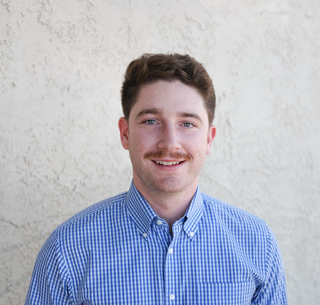
Josh Bernstein is an AI expert and the co-founder and managing partner of SellYourAIData, where he leads buyer relationships and deal strategy. He works with AI every day: he builds the AI agents, large language model content systems and data pipelines that run Something Inc., the SEO and AI search agency he co-founded, which has served more than 95 companies. His focus there is how AI models find, read and cite company information, which is the same question AI buyers ask when they license data. Before that he spent more than ten years running search and growth programs for B2B technology, SaaS, ecommerce and Fortune 500 brands.
- Co-founder and Managing Partner, SellYourAIData
- Co-founder, Something Inc. (SEO and AI search, 95+ companies served)
- Builds AI agents, LLM content systems and AI search visibility tools
- 10+ years in search and growth for B2B and Fortune 500 brands